Updated October 2026: rewritten as a step-by-step guide with a video walkthrough, real TixFox screens, and the fee math for cheap comedy tickets. Checked October 15, 2026.
Quick answer
To sell tickets for a comedy show, create the show on a ticketing platform, add an early bird tier that runs out (for example 20 tickets at $10) and a general admission tier, cap the total at your number of chairs, and share one link. Give every comic their own tracked link, cap your comps with a code, and let automatic reminders bring people back on the night.
- Paid beats free: across 1,070+ events, the median no-show rate was about 28% for free events and 17% for paid ones (PheedLoop).
- Example setup: Early Bird $10 (20 tickets) plus General Admission $15 (40 tickets) for a 60-chair room, and a $7 drink ticket.
- Who brought the crowd: a tracked link per comic shows in Analytics, comic by comic.
- Comps: a 100%-off code with a usage limit of 10. It takes a $15 ticket to $0.00.
- Cost on TixFox: 39¢ a ticket (30¢ under $5) plus Stripe's 2.9% + 30¢. A $15 ticket costs your fan $16.16 and you keep $15.
It's 7:55. The show starts at 8. Forty people said they were coming, there are fourteen in the room, and six of them are on the lineup. If you run a comedy show, you've had that night, and this guide is about never having it again.
Watch: set up a comedy show that sells, start to finish
The video creates the show at 0:49, sets up the early bird at 1:28, adds the drink ticket at 2:16, builds a link for each comic at 2:46, caps the comps at 3:28, and shows which comic brought who at 4:59.
Why free RSVPs leave you with fourteen people
A free RSVP costs nothing to give and nothing to skip. PheedLoop's Event Data Lab looked at more than 1,070 events and found a median no-show rate of about 28% for free events and 17% for paid ones. Their next report found the same thing from another angle: among paid events, no-show rates stayed around 16 to 19% however easy registration was. Payment is what makes people commit.
For a comedy show that gap is the whole night. Comics feed off the room, and a room that's a third empty makes the best set in town land flat. A real price, even a small one, is the first fix. The rest of this guide is about getting people to pay that price early.
How to sell tickets for a comedy show in 6 steps
Our example is Last Call Comedy, a monthly showcase in the back room of a bar: sixty chairs, four comics and a host. Every screen below is the real TixFox dashboard, set up with a demo show.
Step 1: Create the show and answer the DMs before they come
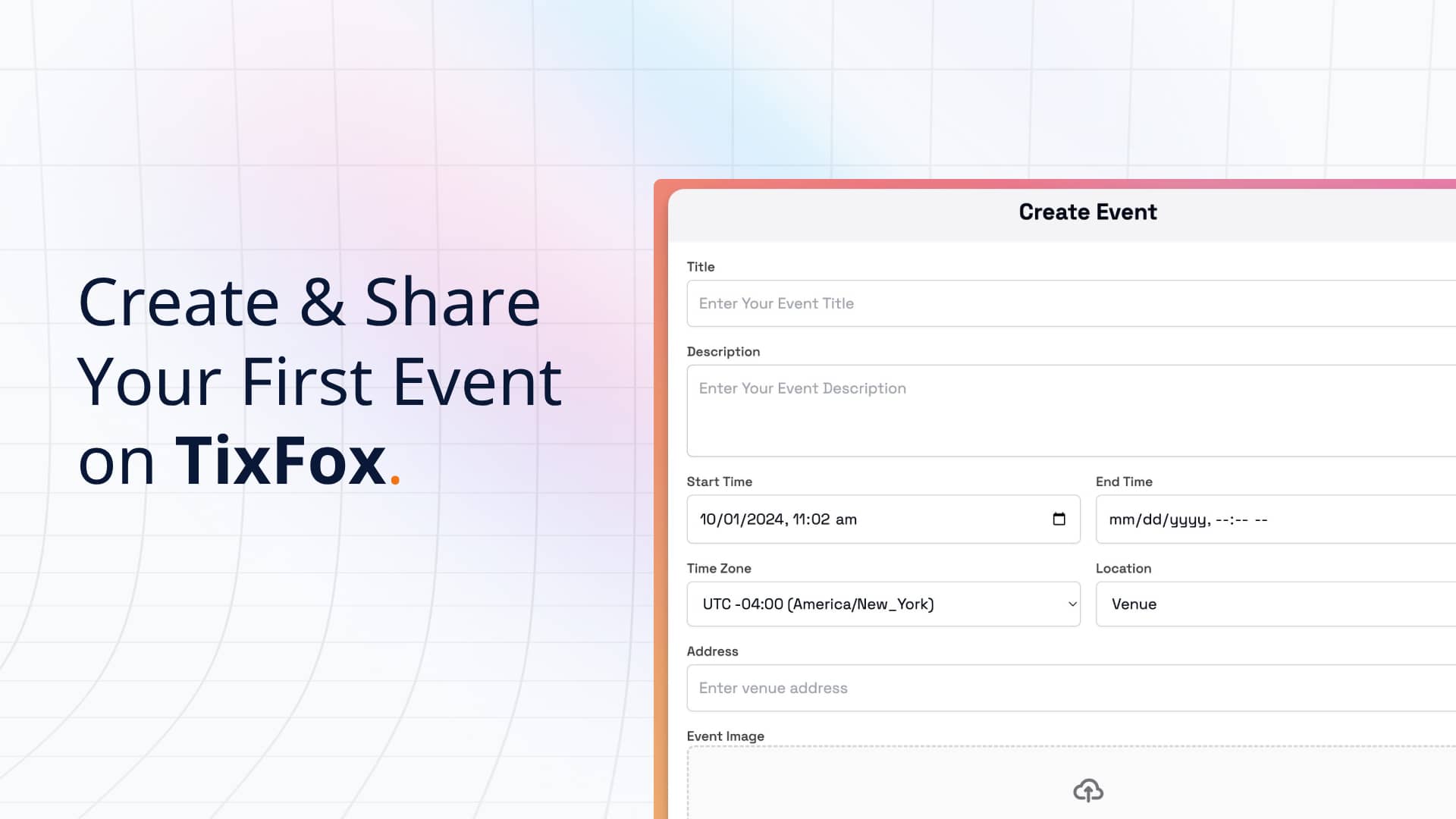
In TixFox, go to Events and click Create Event. Name it the way people say it out loud, then use the description to answer the questions you always get in your DMs: who's on, when doors open, whether it's 21+, whether there's a drink minimum. "Front row gets talked to" is a fair warning too.
Add the date and show time, the venue, and your flyer as the event image (the same one you post on Instagram). Payment Method shows your connected Stripe account, so ticket money lands in your own Stripe balance as it sells. That matters when you pay the headliner on show night.
Step 2: Price it with an early bird that runs out
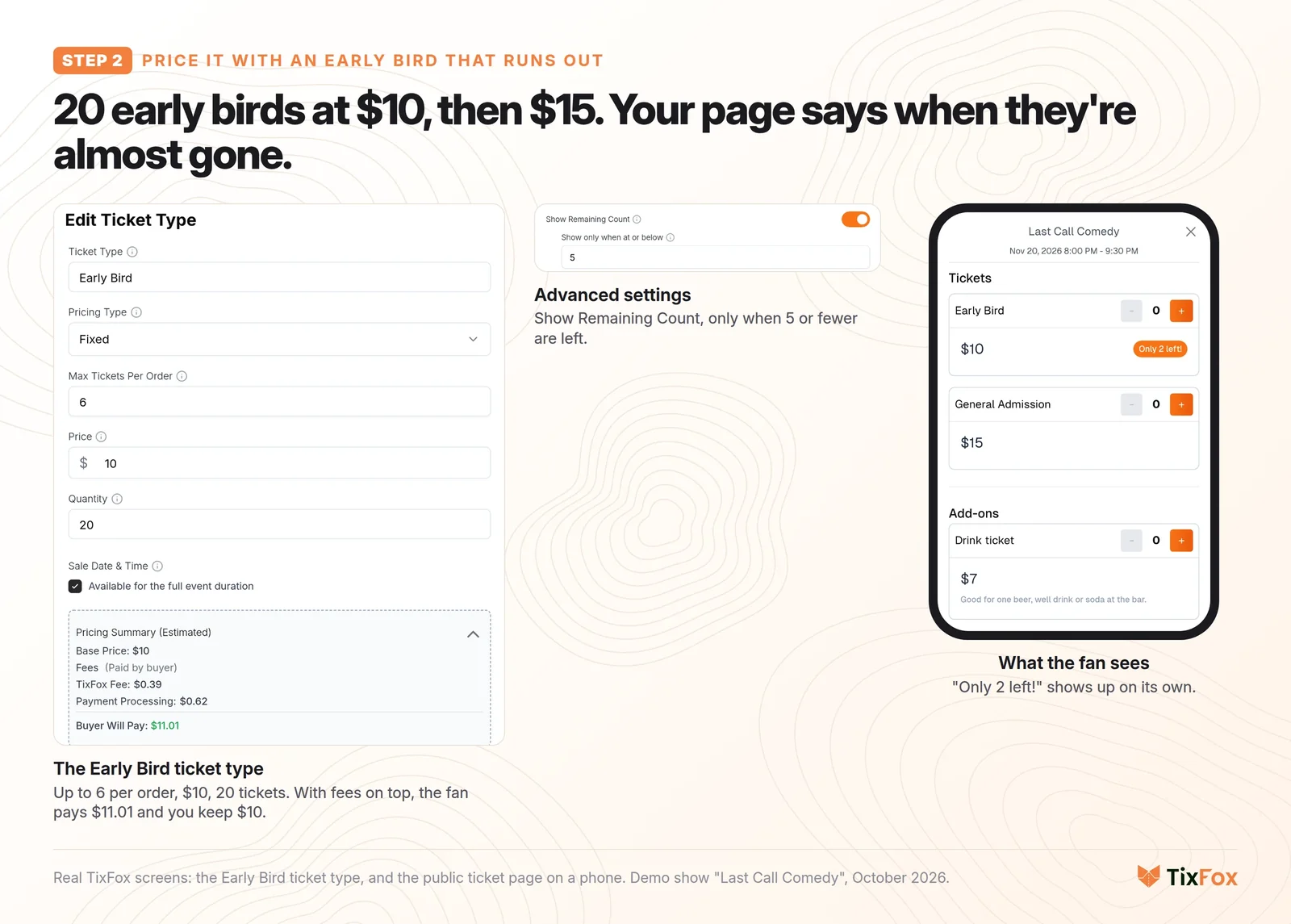
Click Create Ticket Type and start with the early bird: up to 6 per order, $10, and only 20 of them. A cheaper price that disappears gives people a reason to buy now instead of "I'll grab one at the door."
Under Show Advanced Settings, turn on Show Remaining Count and set it to show at 5 or below. Nobody sees "20 left" on a slow week, but when early bird is nearly gone, your page says "Only 2 left!" It's real urgency because it's true.
Then add General Admission: $15 and 40 tickets. Twenty plus forty is your sixty chairs, and sales stop when the room is full. By default the fees go on top, so you keep the full $15. If your crowd hates surprises at checkout, switch Handle Fees to absorb them and set one round price.
Step 3: Sell the drinks with the tickets
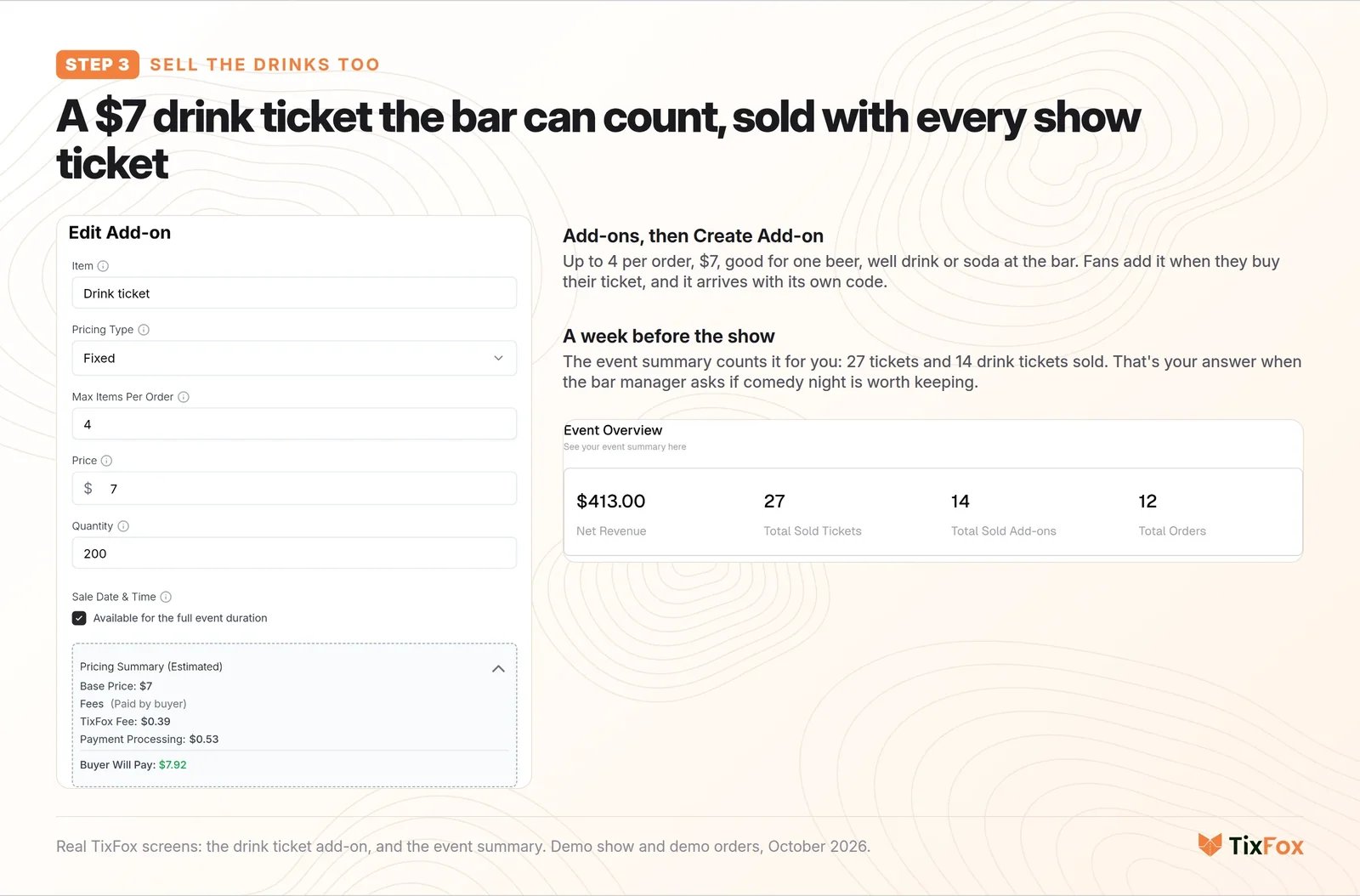
Bars say yes to comedy night because it sells drinks. Give them drinks they can count. Open Add-ons, click Create Add-on, and add a drink ticket: up to 4 per order, $7, "Good for one beer, well drink or soda at the bar."
Fans add it when they buy, and each drink ticket arrives with its own code next to their show tickets. When the bar manager asks if comedy night is worth keeping, your event summary shows exactly how many drinks your crowd paid for before they walked in. In our demo show that's 14 drink tickets a week out.
Step 4: Give every comic their own link
This is the step most producers wish they'd known about sooner. Every comic posts the show, but who actually brings people? Usually you're guessing, or standing at the door asking "who are you here to see?"
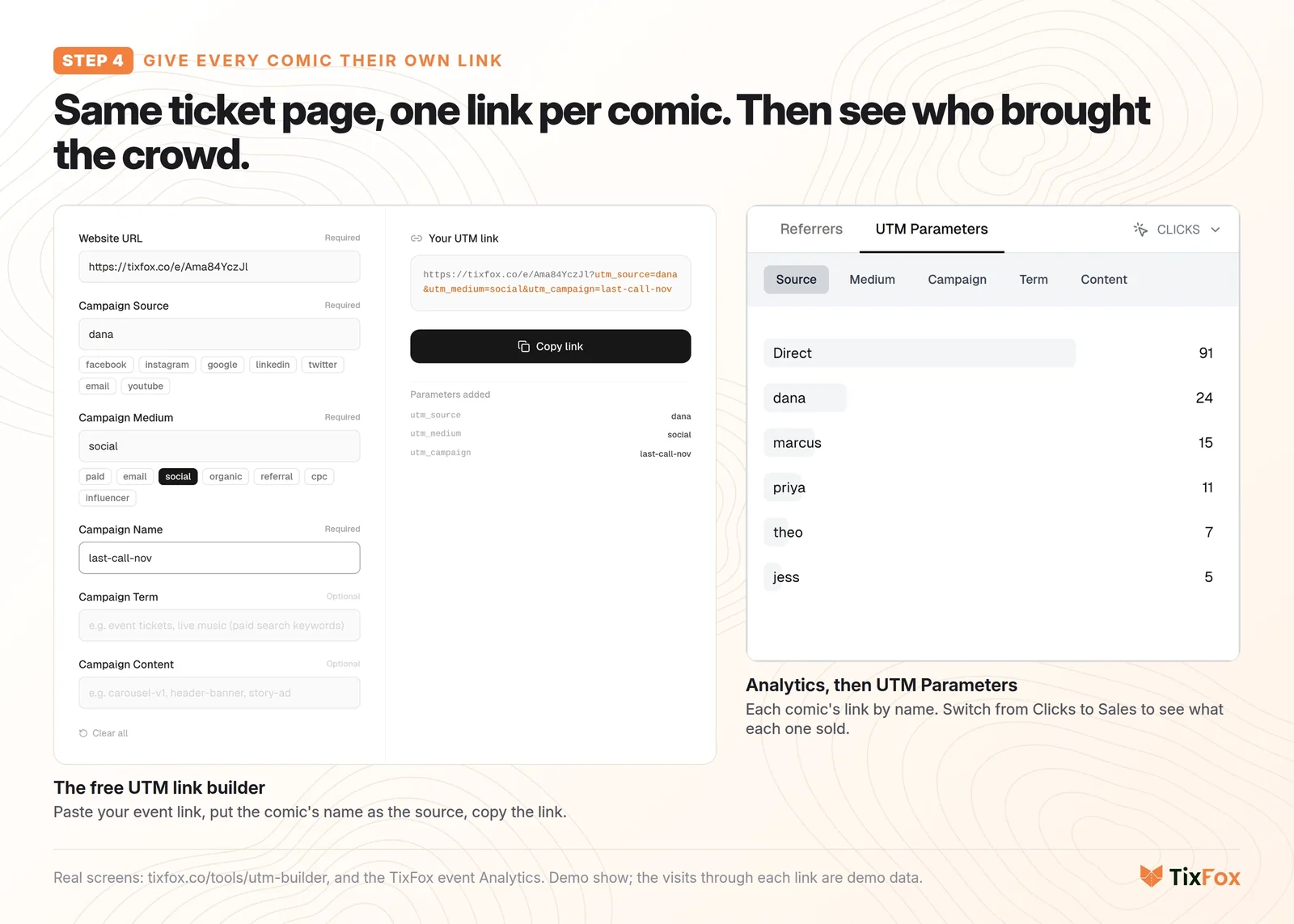
Open TixFox's free UTM link builder, paste your event link, and put the comic's name as the source: dana. Pick a medium (social), name the campaign after the show (last-call-nov) and copy the link. Do one for each comic. It's the same ticket page. The link just carries a name, and TixFox matches each sale to the link that brought the buyer.
A week later, open your event's Analytics and go to UTM Parameters. Every comic is listed by name. In our demo, Dana's link brought 24 people to the page, Marcus 15 and Priya 11. Switch from Clicks to Sales to see what each link sold.
What you do with that is up to you. Thank the comics who bring a crowd, put them higher on the flyer, book them again. We'd skip turning it into a bringer quota. Many comics hate those, and a link that gives credit works better than one that sets a minimum.
Try it on your next show: create a free TixFox account, set up your tickets, and send each comic their own link with the flyer. Free to set up, 39¢ a ticket.
Step 5: Cap your comps with a code
Every comic asks the same thing: can my roommate get in? Comps are fine. Unlimited comps that you track on a napkin aren't.
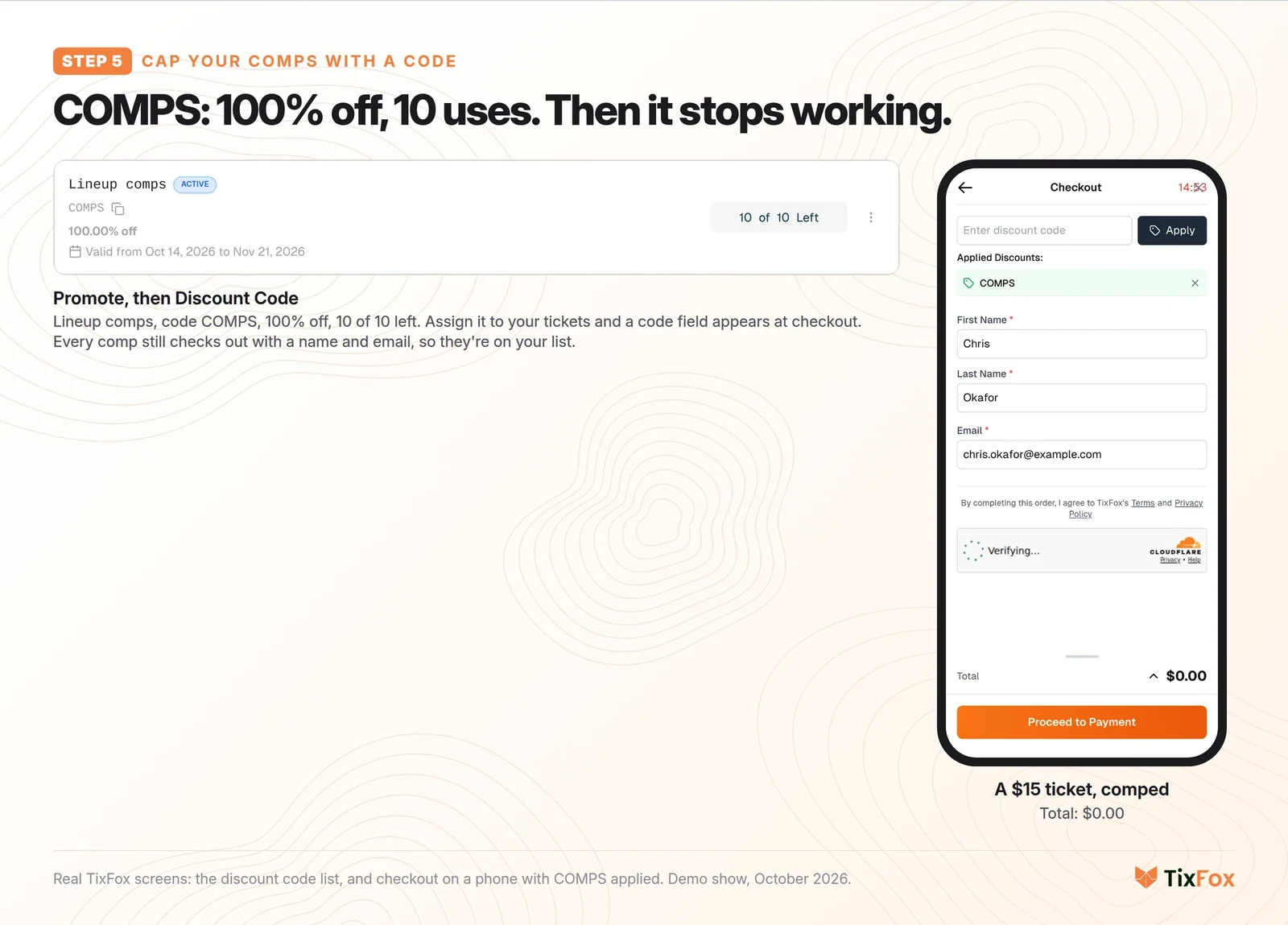
Go to Promote, create a discount code (we called ours Lineup comps, code COMPS) at 100% off with a total usage limit of 10, set it to run until show night, and use Assign to Tickets to turn it on for your ticket types. A code field appears at checkout. A comp types COMPS and the total drops to $0.00. They still check out with their name and email, so they're on your list. After ten uses, the code stops working.
The cap is the point. "Papering the room," giving away a pile of free tickets because sales are slow, fills seats with the same people who skip free RSVPs. Ten comps for the lineup's friends is a gift. A hundred is a fire sale.
Step 6: Publish, share, and let reminders do the nagging
Click Publish now and confirm. Copy the link for your Instagram bio and stories, and download the QR code for the flyer by the bar. If you've never made one, here's how QR code tickets work at the door.
Reminders take care of themselves. TixFox emails every buyer 7 days before and again 24 hours before the show, so you can stop sending the "don't forget, it's Friday" text yourself. For more on getting people to actually come, see how to reduce no-shows.
What your fans see when they buy
On a phone, a fan opens your link, taps Get Tickets, sees Early Bird with "Only 2 left!", picks two tickets and two drink tickets, enters their name and email, and pays by card on Stripe's form. No Venmo screenshots to match up at the door. Their tickets, each with a QR code, land in their inbox right away.
Show night: the door and the walk-ins
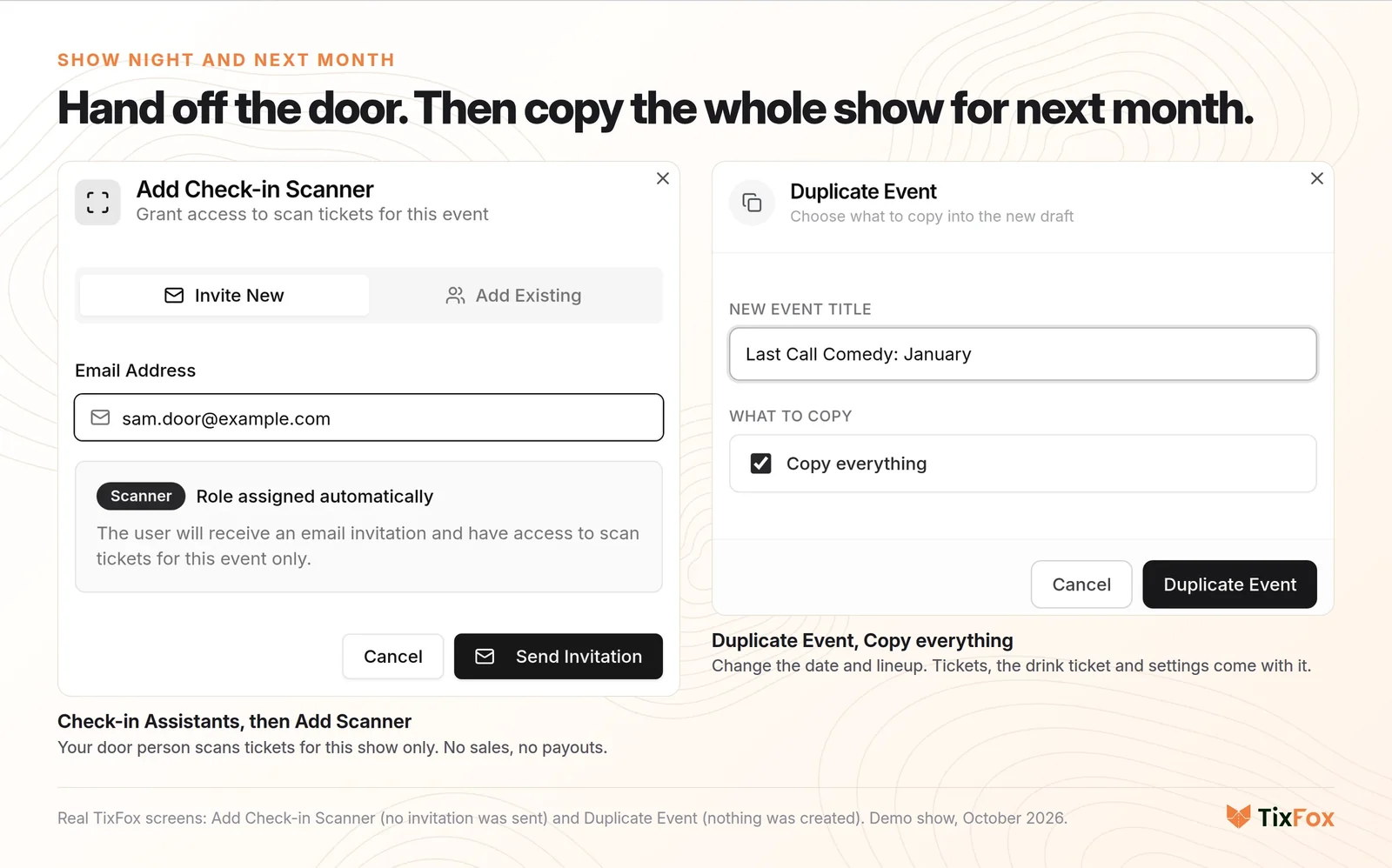
You're hosting, so you can't also run the door. In Check-in Assistants, add your door person by email. They scan tickets for this show in the free TixFox app, and they can't see your sales or payouts.
Someone walks in off the street? If there's a chair, sell them a ticket right there with Tap to Pay on a supported phone. If your room gets a lot of walk-ups, cap General Admission a few seats under your chair count so there's always room for them.
Next month: duplicate the show and email last month's crowd
Don't start from zero. Open the event's menu, click Duplicate Event, keep Copy everything checked, and change the date and lineup. Your ticket types, the drink ticket and your settings come with it.
Then invite last month's crowd. In Issued Tickets, Export CSV lets you pick the columns, including Attendee Name and Attendee Email. Jonathan van Halem, who runs Hot Gossip, a monthly comedy show in Brooklyn, put it plainly in a State of Comedy guest column: "I sell more tickets from the email I send to the 800 or so people on the Hot Gossip mailing list." Every show you run grows that list.
What selling a $15 comedy ticket costs
Comedy tickets are cheap, and that makes the ticket fee matter more. A fee that's a rounding error on a $90 concert ticket is a real slice of a $15 one.
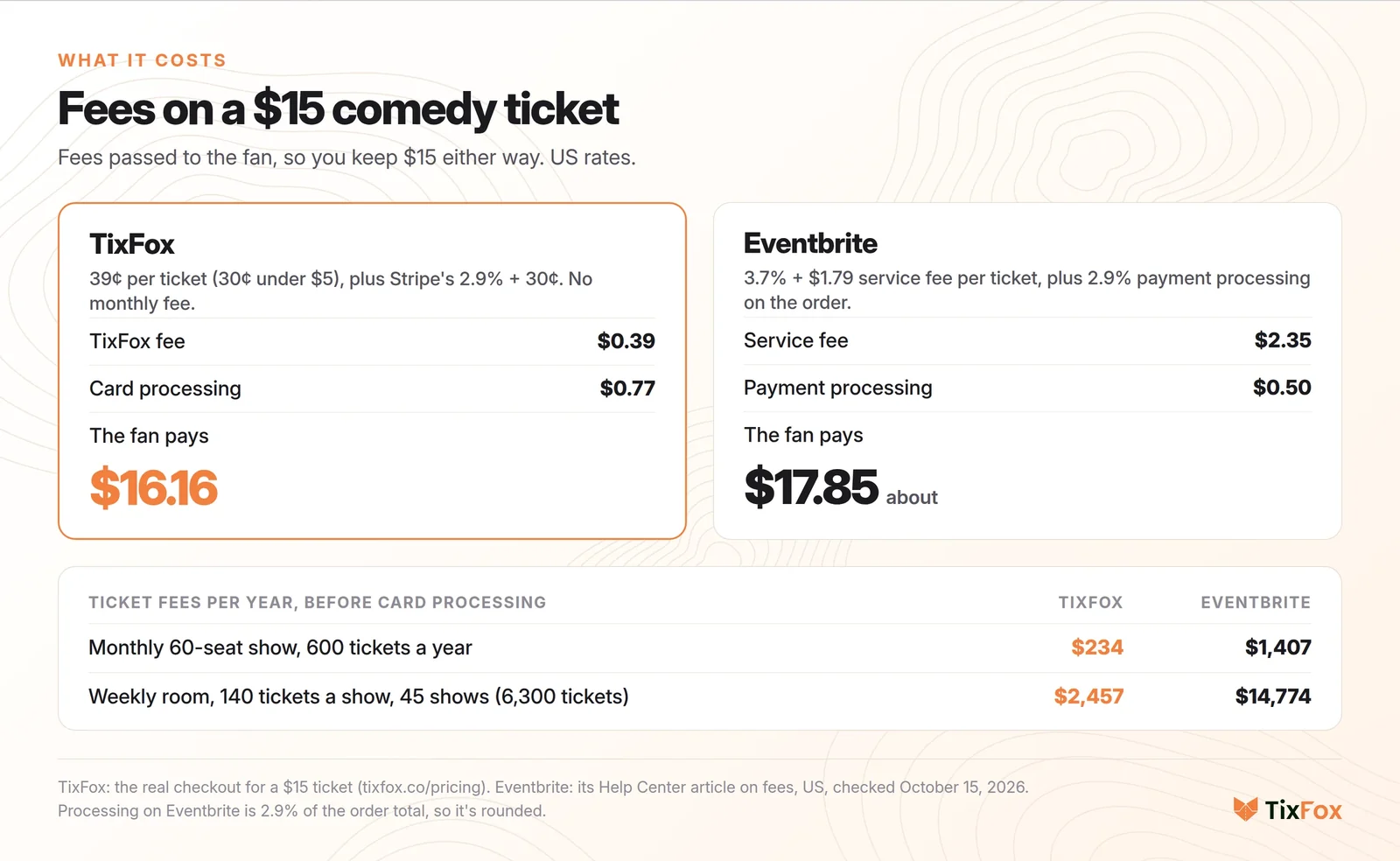
Here's the math with fees passed to the fan. On TixFox, the fan pays $16.16 for a $15 ticket: the 39¢ TixFox fee plus Stripe's 2.9% + 30¢. On Eventbrite in the US, the service fee alone is 3.7% + $1.79, or $2.35 on a $15 ticket, and payment processing adds 2.9% of the order, so the fan pays about $17.85.
Scale it up and the gap stops being small. A monthly 60-seat show selling 600 tickets a year pays $234 in TixFox fees against $1,407 in Eventbrite service fees. A weekly room selling 140 tickets a show for 45 shows pays $2,457 against $14,774. That's before card processing, which both charge.
Eventbrite does give you something for that: a marketplace where strangers browse for things to do. If a real share of your crowd finds you there, that discovery is worth paying for. Most monthly comedy shows sell through the comics' followers, Instagram and their own list, and then you're paying for a marketplace you don't use. If you're comparing platforms for a club or a weekly room, our page on comedy show ticketing covers what TixFox includes, and our guide to how to price event tickets helps you set the number.
If your room is a dinner theater with numbered tables that fans pick at checkout, you'll want seat maps. Reserved seating on TixFox is coming soon, and until then a dedicated reserved-seating tool fits that kind of room better. Most comedy rooms sell general admission, which is what this guide sets up.
Mistakes that empty the room
Going free to "build an audience" usually builds a list of people who don't show. A $5 or $10 ticket with an early bird does more for attendance than a free RSVP with a big number on it.
An early bird that never ends teaches people to wait. If you extend it every month, fans learn the deadline isn't real. Cap it by quantity, the way our 20-ticket early bird does, and let it sell out.
Comps without a cap turn into a guest list you can't see. A code with a usage limit keeps it to the lineup's friends and keeps every name on your list.
Not knowing who brings people means you book on vibes. One link per comic costs nothing and tells you who actually fills seats. If sales are slow even with all of this, our 4-week plan for tickets that aren't selling walks through what to fix first.
FAQ
How do I sell tickets for a comedy show?
Create the show on a ticketing platform, add an early bird tier with a small quantity and a general admission tier, cap the total at your room size, and share one link on Instagram, the flyer and your email list. On TixFox it's free to set up and 39¢ a ticket plus card processing.
How much should I charge for a comedy show?
Price it like a night out at that bar, not like a concert. Our example uses a $10 early bird for the first 20 tickets and $15 after that. Charging something, even a little, matters more than the exact number: paid events had a median no-show rate of about 17% against 28% for free ones. Our guide to pricing event tickets walks through the math.
How do I know which comic brought the most people?
Give each comic their own tracked link: your event link with their name as the source, built in TixFox's free UTM link builder. Analytics then lists each comic's link by name, with clicks and sales.
How do I handle comps for comedians' friends?
Make a discount code at 100% off with a usage limit, such as 10, and assign it to your tickets. Comps check out with their name and email at $0.00, so they're on your list, and the code stops working after ten uses.
Can I sell tickets at the door too?
Yes. Keep a few seats off the online sale for walk-ups and sell them at the door with Tap to Pay in the TixFox app on a supported phone. Your door person scans online tickets in the same app.
When do I get the money from ticket sales?
On TixFox, ticket money goes into your own connected Stripe account as tickets sell, and Stripe pays out to your bank on your payout schedule. That's how you can pay the headliner on show night. On Eventbrite, payouts are normally sent after the event (here's how Eventbrite payouts work).
Does TixFox do reserved seating for comedy clubs?
Reserved seating on TixFox is coming soon. Today TixFox sells general admission and ticket tiers, like Early Bird, General Admission or a front-row tier, which is how most comedy rooms sell their shows.
Ready for your next show? Create your free TixFox account, set up an early bird and a link for every comic, and see who fills the room.
Sources
- PheedLoop Event Data Lab: Report #05, One in Five Registered Attendees Won't Show Up (median no-show about 28% free, 17% paid, 1,070+ events) and Report #06 (paid events stay around 16 to 19%). Checked October 15, 2026.
- State of Comedy: Guest column by Jonathan van Halem on selling tickets for Hot Gossip. Checked October 15, 2026.
- Eventbrite Help Center: Eventbrite fees (US: 3.7% + $1.79 service fee per ticket, 2.9% payment processing of the total order; fees can be passed to attendees). Checked October 15, 2026.
- Stripe: US pricing, 2.9% + 30¢ per successful domestic card payment.
- TixFox: Pricing, UTM link builder, automated reminders, check-in assistants, Tap to Pay, and the TixFox dashboard (Create Event, ticket types, add-ons, discount codes, Analytics, Duplicate Event, Export CSV), recorded with a demo show in October 2026. The show, its lineup, its buyers and its link visits are demo data. Nothing was paid at checkout.
Keep more of every ticket sale.
- 39¢ per ticket, $0 on free events
- No monthly fee, no contract
- Get paid as each sale comes in